


The World Consumer Rights Day is marked on 15th March each year, a day dedicated to raising awareness about the rights and protection of consumers. The observance traces its roots to 15 March 1962, when John F. Kennedy addressed the United States Congress and formally recognized four fundamental consumer rights: the right to safety, the right to be informed, the right to choose and the right to be heard. This historic moment ignited a global consumer movement that continues to demand accountability, fairness and justice in increasingly complex and rapidly evolving markets.
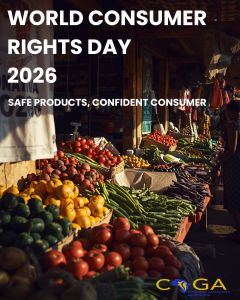
The 2026 theme, “Safe Products, Confident Consumers,” emphasizes the importance of ensuring that goods and services available in the market meet high standards of safety and quality. In an era of expanding global trade and rapidly evolving technology, consumers face risks from unsafe products, misleading information and weak regulatory enforcement. The theme calls on governments, businesses and civil society to strengthen product safety standards, improve transparency and ensure effective redress mechanisms. Ensuring product safety is therefore not only a regulatory obligation but also a prerequisite for consumer confidence and market integrity.
In Kenya, consumer protection is closely tied to everyday realities, including unsafe food, counterfeit goods and poor product labeling, all of which continue to expose consumers to health risks and economic loss. These challenges disproportionately affect vulnerable populations, who often have limited access to reliable information and effective avenues for redress. Addressing these gaps requires stronger enforcement of safety standards, increased consumer awareness and more responsible production and distribution systems. Such measures are essential for building trust in markets and safeguarding public health.
 Organizations like the Consumer Grassroots Association, working at the grassroots level, play a vital role in advancing consumer rights, particularly in contexts where regulatory enforcement remains uneven. They focus on educating consumers about their rights and responsibilities while advocating for safe, nutritious and sustainable food systems. Through community engagement, policy advocacy and public education, such organizations empower citizens to demand accountability from producers and regulators, ensuring that markets are fair, transparent and responsive to consumer needs.
Beyond awareness, consumer organizations act as both watchdogs and bridges. They monitor harmful practices, expose unsafe products and provide channels for redress. At the same time, they foster dialogue between consumers, businesses and regulators, helping to build systems that are not only compliant but also responsive and inclusive. Their work is critical in sectors such as food systems, where safety, nutrition and sustainability intersect directly with public health and sustainable environmental practices.
As the world marks World Consumer Rights Day 2026, it serves as a reminder that protecting consumers is a shared responsibility. Governments are called upon to enforce strong regulatory frameworks, businesses to uphold product safety and transparency and consumers to remain informed and vigilant. Together, these efforts contribute to building markets where safe products, which are not merely a technical standard but also a social guarantee, lead to confident consumers and healthier societies.
